




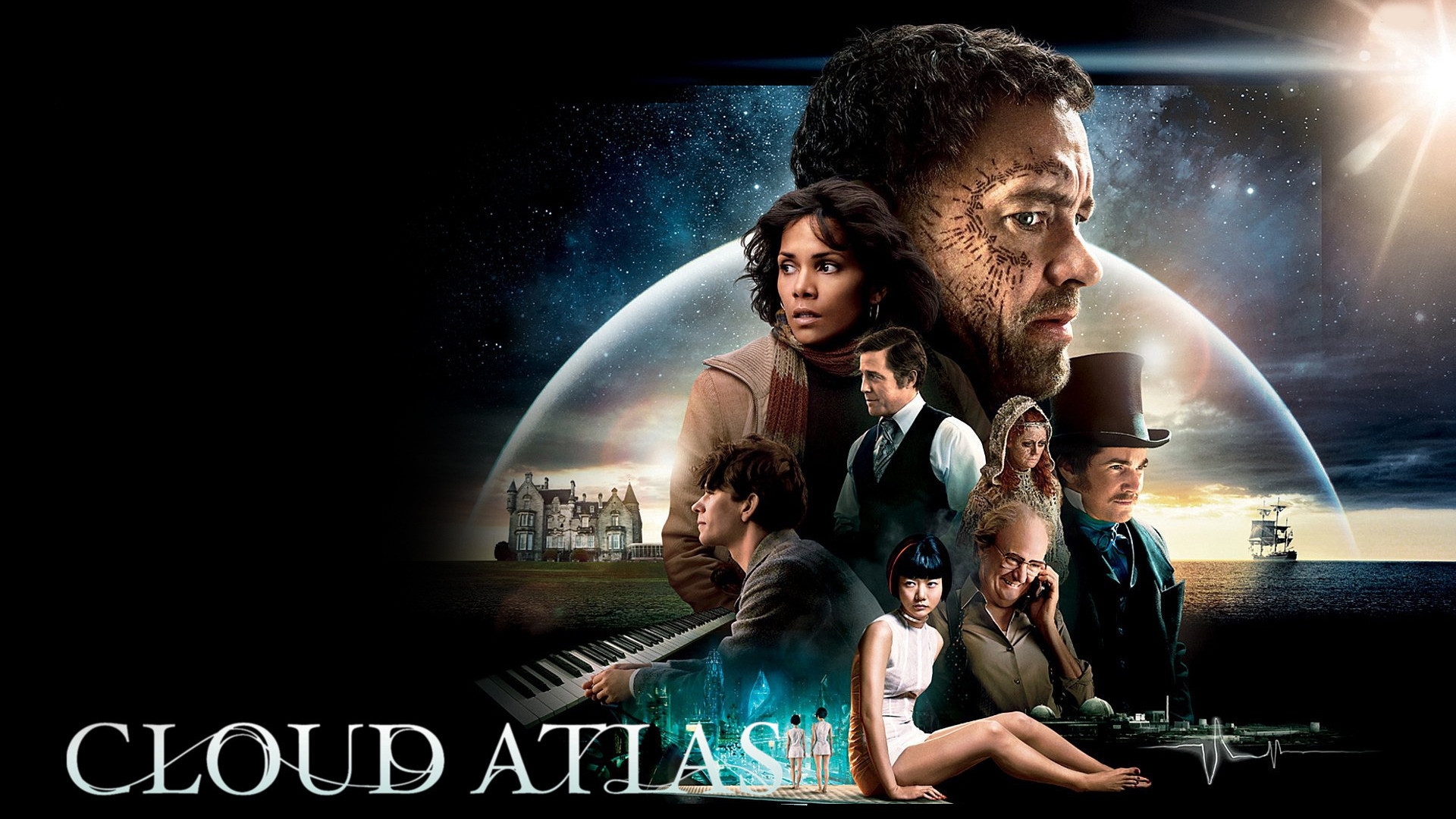
Cloud Atlas is a movie event in every sense. I feeling stunned, not just by the scale, but by how confidently it threads six completely different stories across time and space. The 19th century South Pacific, 1970s conspiracy thriller, futuristic rebellion, post-apocalyptic survival, somehow it all holds together.
What hits hardest is the emotion underneath all that ambition. The structure is complex, and I get why some viewers bounce off it, but it never felt complicated just to show off. The rapid cutting, visual echoes, and way one story bleeds into the next gives the whole thing a rhythm that feels almost musical.
The makeup and prosthetics are wild, especially watching Tom Hanks move through different ages, identities, and moral shades. It could have been a gimmick, but it fits the point: people change faces, lives, and circumstances, yet something true keeps pushing through. Hanks is fantastic, and his Timothy Cavendish storyline swings from hilarious to heartbreaking without losing balance. Hugh Grant also makes a nasty impression, turning up as a recurring thread of pure menace.
One sequence that always sticks with me is the cross-cutting between the nursing home escape, played like slapstick, and a brutal corporate murder with full thriller tension. That contrast should fall apart. Instead, it sharpens the film’s big idea: human struggle keeps repeating, no matter the century or setting.
Verdict: yes, it is long, messy, and a lot to take in. But if you meet it halfway, the payoff is bold, emotional, and unforgettable.


Leave a Reply